我最親愛的阿嬤,在迎向馬年的立春時節,離開了我們,享壽101歲。
我是她大漢囝仔的大漢囝仔,第一個孫女。在她的懷裡掌上,我從呱呱落地長到應嘴應舌,直到妹妹出生,我才被老爸從阿嬤手中給拖回去。
阿嬤一直是我的偶像、 role model 。她從來都不只是叫你吃多一點,穿暖一點的阿嬤,她讓你以做為她的孫女為榮。
國小時,我可以跟同學炫耀有五道彈出機關的無敵鐵金鋼造型的鉛筆盒,大聲的說,「這是我阿媽從日本帶回來的喔」;或是在36度的夏天戴著蓋耳朵的貂皮帽,跟大家介紹:「這是我阿嬤去哈爾濱帶回來的,是東北三寶喔」。 全班都知道我有一個環遊世界好比小飛俠的阿嬤,而且帶回來的禮物都很酷。
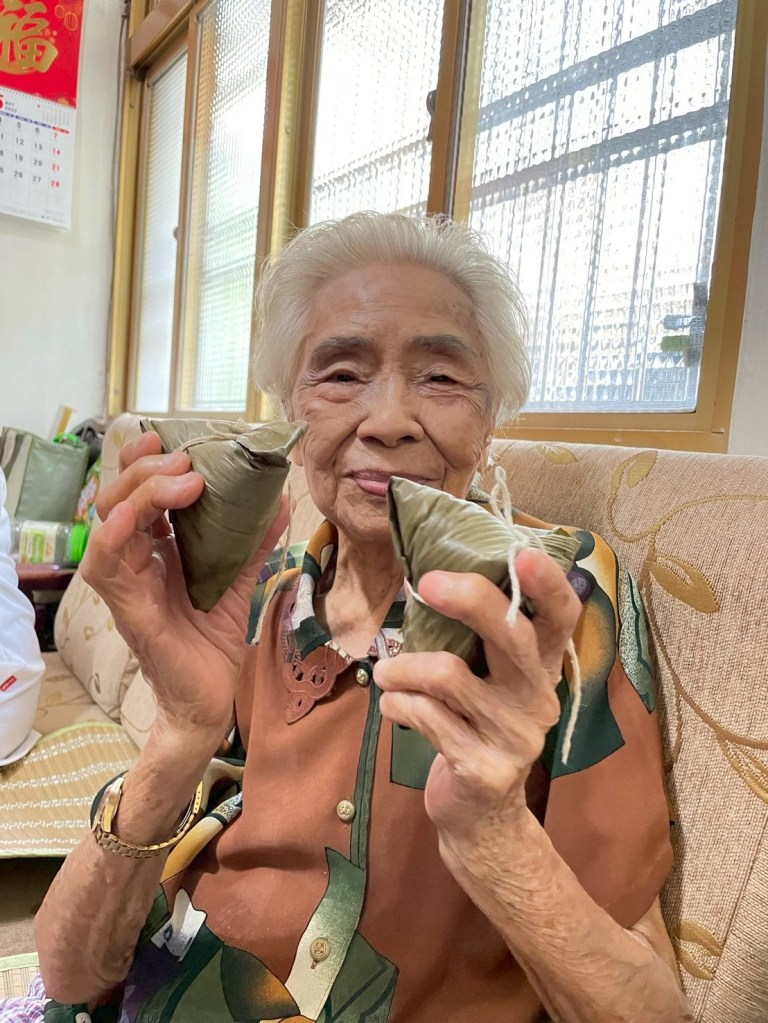
高中時,只不過跟阿嬤稍稍哭訴一下家政課的作業很難,毛線茶杯墊打到脫線,她三天就打出的混紡帶小花的毛線背心跟帽子,剩下的毛線順便拼成六塊茶杯墊,讓我不止可以交自己的作業,還可以拿去跟同學換下學期烹飪課的蛋黃酥跟葱油餅。 之後我已經move on 了被力學跟微積分折磨的時候,阿嬤卻還在精益求精地跑去重慶南路買日文雜誌研究針法跟花樣。幾十年下來,只要氣溫下到10度,子孫們及子孫的朋友們就會把穿上阿嬤的毛衣毛帽。 而我到現在卻還是連粽子的綁縄都不會,真的就是巧嬤飼憨孫。
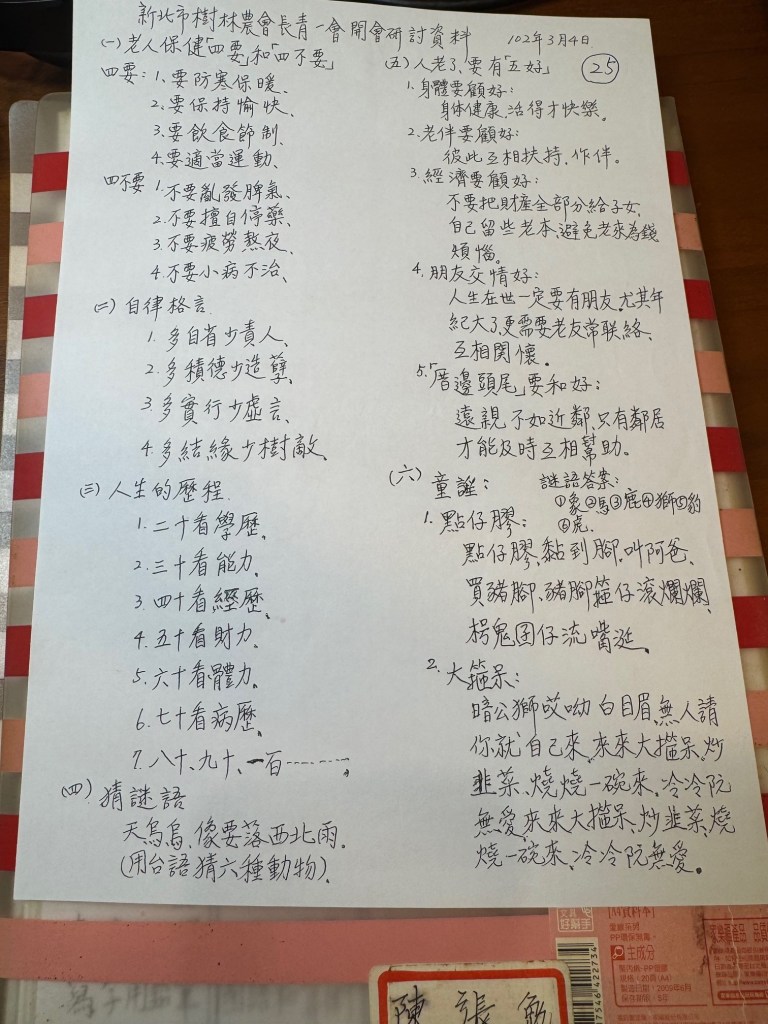
我開始上班後,阿嬤卻跑回去唸松年大學,每天抱著國語辭典唸ㄅㄆㄇㄈ,順便學電腦用Excel 表,只是為了要好好的幫樹林長青會記帳算錢,收入支出記得清楚明白,每次出遊都用最簡省的花費,讓所有的會員都玩得多,吃得好,住得舒服。 到後來所有的街坊隣居老朋友,都只參加阿勉會去的團。
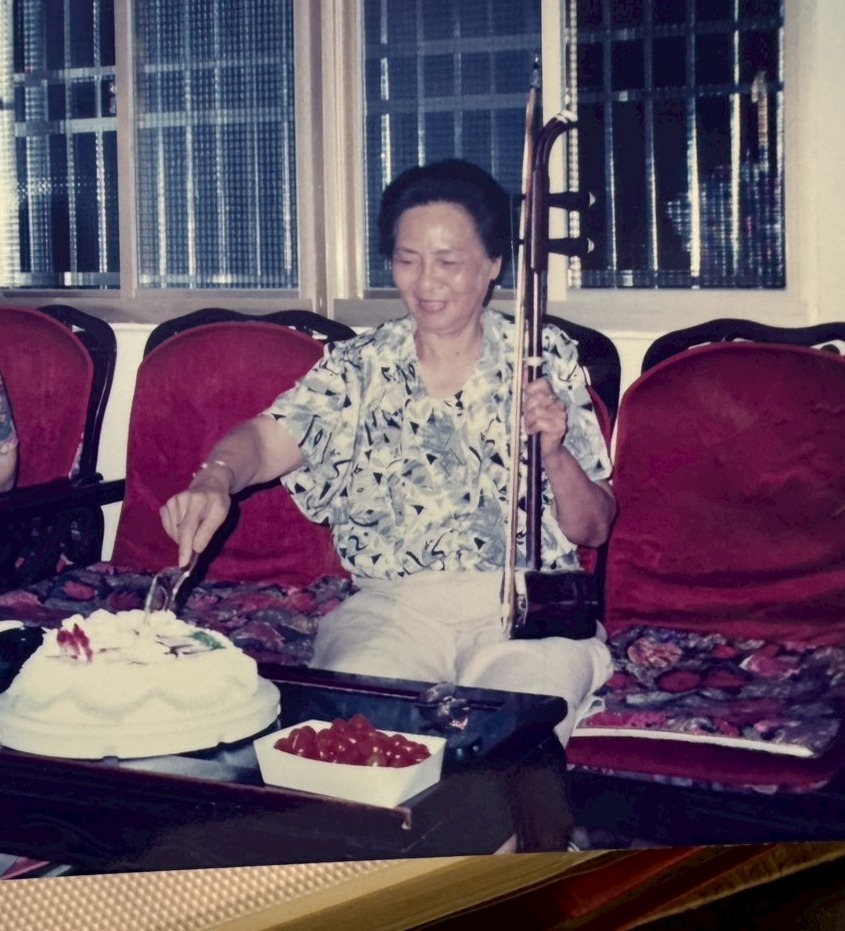
我才在考慮要不要學打Golf 時,阿嬤則開始打槌球了,不但幫她們那隊拿冠軍,還進階成裁判。不打球的時候就領著朋友從樹林搭火車轉捷運再轉公車,上陽明山走路泡湯。 在櫻花樹下拉著南胡,唱著津輕海峽冬顏色。
所以她一直是我的偶像,聰明又漂亮,認真做好每件事,快樂過好每一天。我覺得她很為自己而活。
「怎麼可能只為自己而活?」老媽搖搖頭。
是啊不可能,這一大家子都靠她。阿嬤二十歲結婚後就陸續了生了七個孩子,一個有小兒麻痺一個體弱多病都没能養大。 外公有糖尿病四十幾歲就卧床,家裡重擔得一個人挑起。 只能靠著一個小麵攤,賣起切仔麵跟滷味。 錢永遠不夠用,夏天做冰棒,冬天織毛衣,端午節到了去幫忙包粽子,偶爾還去幫忙辦桌充當總舖師的水腳,再接一些家庭代工回來做,就這樣養大了五個孩子。
因為前半輩子這麼辛苦地做這做那,所以没有什麼菜是阿嬤不會弄的。 她自己的口味也極其敏銳,不吃稀飯、愛喝熱湯、愛吃甜。 老媽跟舅舅們在阿嬤身旁多少也學了不少私藏菜,像是:
老媽的桂圓紅麴米糕,擺上蔓越莓堅果,起鍋嗆下一大匙高梁酒,可以暖過一整個冬天。
大舅的帶皮黑豬座頭肉焢的魯肉,油亮鹹香配白飯,再來碗大舅媽的芋頭排骨酥灑上幾朵香菜提味,那是遠征新加坡的表妹最想念的醇厚家鄉味,喝上一小杯釀上兩年的梅酒,清甜爽快。
小舅小舅媽做的水果豆腐乳,吸飽南部陽光的鳳梨跟香蕉,層層鹹甘交織,蒸午仔魚拌地瓜葉不能少的萬用調料,我朋友回美國必帶的secret sauce。
這麼多年來,他們又勤快地做起這些菜,不就是想讓這兩年失去胃口吞嚥能力的阿嬤,想起她曾經喜歡的味道?
那阿嬤您現在可以自由自在做自己了,您想去那裡,吃什麼呢?
想不想再一次搭火車從樹林去新北投公園?跟著日本小學老師,一邊唱著桃太郎の歌,一邊光腳泡野溪溫泉? 還是會想再跟阿春跑去大稻埕的淡水戲院看戲尾嗎?
再去一次九州鹿兒島、輕井澤? 跑遠一點到多倫多、尼加拉瓜大瀑布? 還是再來一趟歐洲三十國?
還是探索未知的淨土之際呢。
祝福您阿嬤,我最愛的偶像。
My Dearest Grandma
My dearest Grandma left us at the beginning of spring, as we welcomed the Year of the Horse. She was 101 years old.
I am the eldest child of her eldest child — her first granddaughter. I grew up in her arms, from the day I was born until I was already talking back. Only when my younger sister was born did my father finally retrieve me from her embrace.
Grandma was always my idol — my role model. She was never just the kind of grandmother who told you to eat more and dress warmer. She made you proud to be her granddaughter.
In elementary school, I showed off a Mazinger-style pencil case with five hidden compartments and proudly announced, “My grandma brought this back from Japan!” Once, in 36-degree summer heat, I wore a fur hat with ear flaps and told everyone, “Grandma brought this from Harbin — it’s one of the treasures of the Northeast.” Everyone in class knew I had a globe-trotting grandmother, like Peter Pan, and that her gifts were always the coolest.
In high school, I once complained that my home economics knitting assignment was too difficult. Within three days, she had knitted a beautiful mixed-yarn vest and matching hat with tiny floral patterns — and pieced together six cup coasters from the leftover yarn. Not only did I complete my assignment, I even traded the extras for pastries and scallion pancakes in the next semester’s cooking class.
Long after I had moved on to being tormented by mechanics and calculus, she was still going to Chongqing South Road to buy Japanese knitting magazines, studying new stitches and patterns. For decades, whenever the temperature dropped below 10 degrees, children, grandchildren, and even their friends would put on Grandma’s sweaters and hats. And to this day, I still don’t even know how to tie the string for rice dumplings.
When I began working, Grandma went back to school and enrolled in a senior college. She studied phonetics with a Mandarin dictionary in hand and learned to use Excel on a computer — all so she could properly keep the accounts for the Shulin Senior Association. She recorded every income and expense clearly and organized trips that cost the least but allowed everyone to enjoy more, eat well, and stay comfortably. Eventually, the neighborhood seniors would only join the tours if Grandma was going.
While I was still debating whether to learn golf, Grandma had already taken up croquet. She led her team to championships and even became a referee. When she wasn’t playing, she would lead her friends from Shulin by train, then metro, then bus, up to Yangmingshan to hike and soak in hot springs. Under cherry blossoms, she played the erhu and sang “Tsugaru Kaikyō Fuyugeshiki.”
She was always my idol — intelligent and beautiful, devoted to everything she did, and joyful in every day she lived. I thought she truly lived for herself.
“How could she have lived only for herself?” my mother said, shaking her head.
She couldn’t have. This entire family depended on her.
She married at twenty and gave birth to seven children; two sons did not survive. My grandfather became bedridden in his forties due to diabetes. The burden of the family fell entirely on her shoulders.
With a small noodle stall selling sliced noodles and braised dishes, she kept the family afloat. Money was never enough. In summer, she made popsicles. In winter, she knitted sweaters. During the Dragon Boat Festival, she wrapped rice dumplings. She helped cater banquets and took on home-assembly work — and in this way, she raised five children.
Because of those years of hardship, there was almost nothing she couldn’t cook. Her palate was sharp and particular — she didn’t eat porridge, loved hot soup, and had a sweet tooth. Over the years, my mother and uncles learned many signature dishes from her.
My mother’s longan and red yeast rice cake, topped with cranberries and nuts and finished with a splash of Kaoliang liquor, could warm an entire winter.
My eldest uncle’s braised pork — glossy and savory — paired with my aunt’s taro pork rib soup sprinkled with cilantro, became the deep, comforting taste of home that my cousin in Singapore missed most. A small cup of plum wine aged two years made it even sweeter.
My younger uncle and aunt’s fermented fruit tofu — layered with pineapple and banana ripened under southern sunshine — became the secret sauce my friends carried back to the United States.
For years, they kept cooking these dishes. Perhaps they hoped that even when Grandma had lost her appetite and her ability to swallow in her final two years, she could still remember the flavors she once loved.
Grandma, now you are free to be yourself.
Where would you like to go? What would you like to eat?
Would you like to take the train once more from Shulin to Xinbeitou Park? To follow a Japanese elementary school teacher, singing “Momotarō” while soaking your feet in a wild hot spring?
Would you visit Dadaocheng again, or see the final act at Tamsui Theater?
Would you return to Kyushu, to Kagoshima, to Karuizawa? Travel farther still — to Toronto, to Niagara Falls? Or tour Europe’s thirty countries once more?
Or are you now exploring a pure land unknown to us?
Bless you, Grandma — my most beloved idol.
 雲大霧裡的二三事